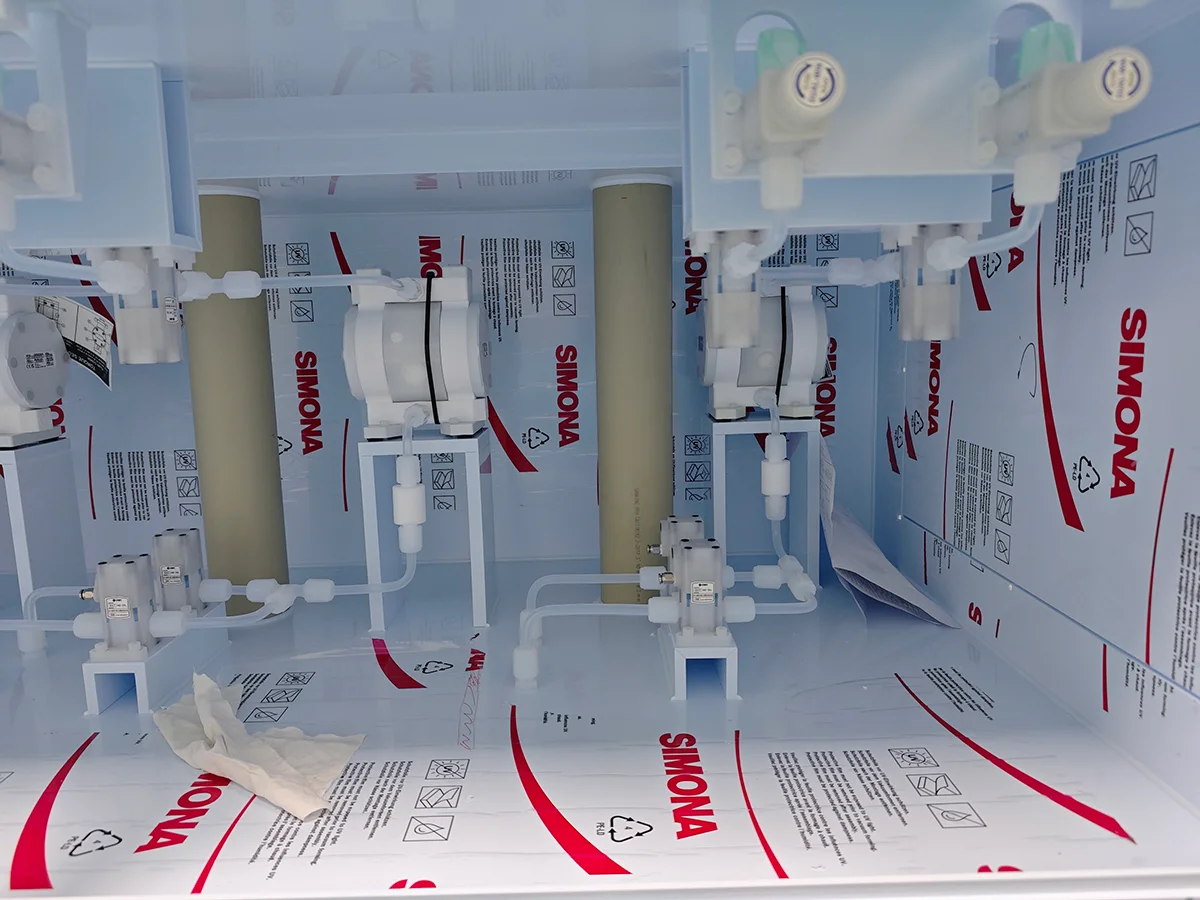
I’ve noticed that many people are curious about what exactly CDS liquid supply is. It’s a systematic project that can’t be explained in just a few words. Since you all want to know, let’s go through it from start to finish!
What does CDS (Chemical Delivery System) mean? It refers to a centralized chemical liquid supply system designed for automatic and continuous supply of chemical liquids on the production line. This system typically comprises a chemical source (such as a storage container), a chemical delivery module, a piping system, and associated control equipment. The chemical source is responsible for storing the chemical liquid, while the chemical delivery module is tasked with filtering, mixing, and delivering the chemical liquid to various process stations
Working principle
When the process equipment requires liquid supply, a demand signal will be sent. Upon receiving the liquid demand signal, the control program of the CDS liquid supply system will automatically open the pump solenoid valve, pneumatic valve solenoid valve, etc., allowing the chemicals to be delivered through the pump. After passing through the filtration device, the chemicals will be supplied to the VMB branch valve box, and then from the branch valve box to the process equipment. Throughout the entire process, the system can achieve high automation and precise control.
Functional Features
High automation: The CDS liquid supply system can achieve 24-hour uninterrupted automated liquid supply, reducing manual intervention and improving production efficiency.
Precise control: The system can precisely control parameters such as flow rate, temperature, and concentration of chemical solutions according to process requirements, ensuring the stability of production processes and product quality.
High safety: The system adopts advanced leak detection technology and safety measures, such as double-tube conveying and leak detectors, to ensure the safe supply and use of chemical liquids.
High flexibility: The CDS liquid supply system can be flexibly configured and expanded according to production needs, meeting the liquid supply requirements of different processes and equipment.